
 Services ›
  Gifts, Sports & Toys ›
  Machinery, Industrial Parts & Tools ›
  Transportation ›
  Mineral, Textile, Herbal and Animal Products ›
  Agriculture & Food ›
  Health & Beauty ›
  Oil, Gas, Chemical, Rubber and Plastics ›
  Electric, Electronics and Telecommunications ›
  Apparel,Textiles & Accessories ›
  Packaging, Advertising & Office ›
  Home, Lights & Construction ›
 Services Browse all products ›
Mining & Oil & Gas Services 7 active subcategories Building & Construction & Maintenance Services 2 active subcategories Industrial Production & Manufacturing Services 9 active subcategories Industrial Cleaning Services 4 active subcategories Environmental Services 4 active subcategories Transportation & Storage & Mail Services 6 active subcategories Management & Business Professionals & Administrative Services 7 active subcategories Engineering & Research & Technology Based Services 7 active subcategories Editorial & Design & Graphic & Fine Art Services 6 active subcategories Public Utilities & Public Sector Related Services 3 active subcategories Financial & Insurance Services 5 active subcategories Healthcare Services 7 active subcategories Education & Training Services 5 active subcategories Travel & Food & Lodging & Entertainment Services 6 active subcategories Personal & Domestic Services 2 active subcategories National Defense & Public Order & Security & Safety Services 1 active subcategories Politics & Civic Affairs Services 4 active subcategories Organizations & Clubs 3 active subcategories Gifts, Sports & Toys Browse all products ›
Machinery, Industrial Parts & Tools Browse all products ›
Mining & Well Drilling Machinery & Accessories 5 active subcategories Farming & Fishing & Forestry & Wildlife Machinery & Accessories 2 active subcategories Building & Construction Machinery & Accessories 1 active subcategories Industrial Manufacturing & Processing Machinery & Accessories 19 active subcategories Material Handling & Conditioning & Storage Machinery & their Accessories & Supplies 5 active subcategories Power Generation & Distribution Machinery & Accessories 5 active subcategories Tools & General Machinery 4 active subcategories Structures & Building & Construction & Manufacturing Components & Supplies 14 active subcategories Manufacturing Components & Supplies 29 active subcategories Distribution & Conditioning Systems & Equipment & Components 4 active subcategories Laboratory & Measuring & Observing & Testing Equipment 3 active subcategories Cleaning Equipment & Supplies 4 active subcategories Service Industry Machinery & Equipment & Supplies 2 active subcategories Transportation Browse all products ›
Mineral, Textile, Herbal and Animal Products Browse all products ›
Agriculture & Food Browse all products ›
Health & Beauty Browse all products ›
Oil, Gas, Chemical, Rubber and Plastics Browse all products ›
Electric, Electronics and Telecommunications Browse all products ›
Electronic Components & Supplies 6 active subcategories Electrical systems & Lighting & components & accessories & supplies 4 active subcategories Information Technology Broadcasting & Telecommunications 5 active subcategories Defense & Law Enforcement & Security & Safety Equipment & Supplies 5 active subcategories Apparel,Textiles & Accessories Browse all products ›
Packaging, Advertising & Office Browse all products ›
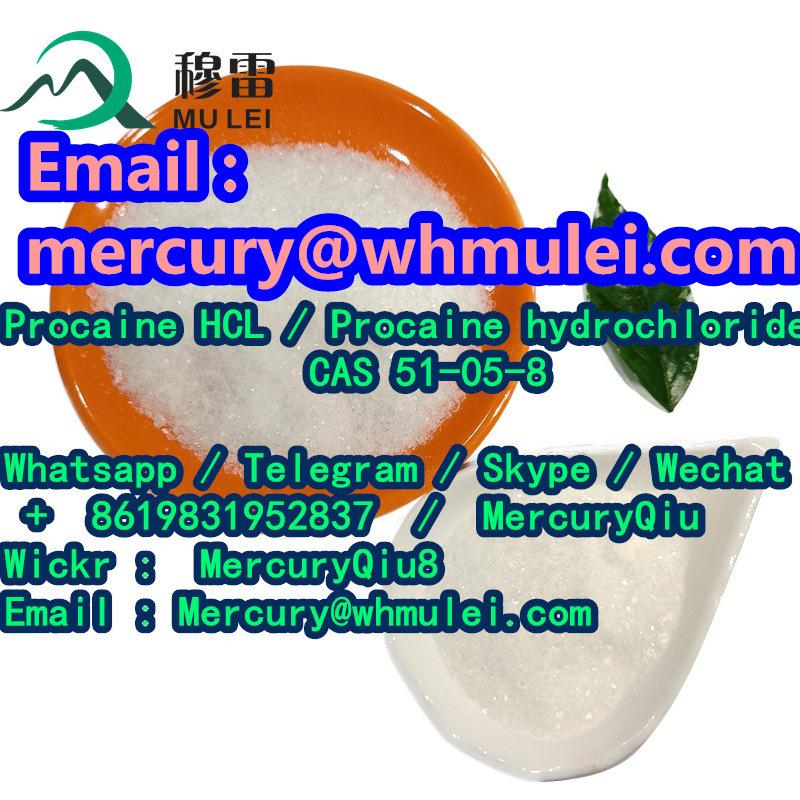
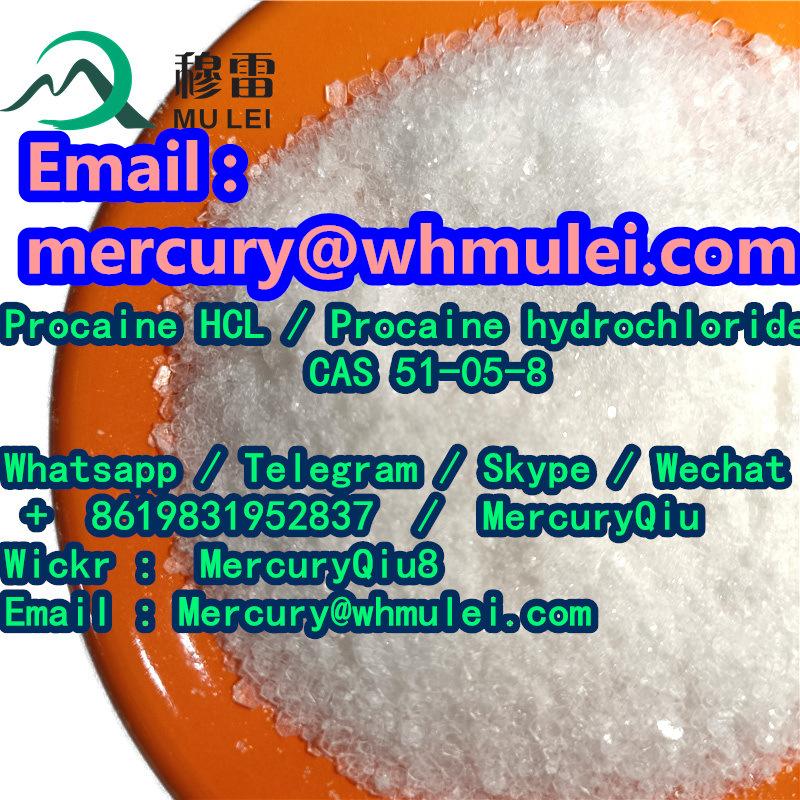
Direct Supply Fresh Stock Procaine/Procaine HCl/phenacetin


Company : Mulei (Wuhan) New Material Technology Co. Ltd Whatsapp / Telegram / Skype / Wechat : + 86 19831952837 ( MercuryQiu) Wickr : MercuryQiu8 Email : Mercury@whmulei.com Product Name Procaine Procaine Alias Procaine Base , Cas 59-46-1 , 4-aminobenzoic acid 2-diethylaminoethyl ester Procai...
Company : Mulei (Wuhan) New Material Technology Co. Ltd
Whatsapp / Telegram / Skype / Wechat
: + 86 19831952837 ( MercuryQiu)
Wickr : MercuryQiu8
Email : Mercury@whmulei.com
Product Name Procaine
Procaine Alias Procaine Base , Cas 59-46-1 , 4-aminobenzoic acid 2-diethylaminoethyl ester
Procaine Density 1.1 + / - 0.1 g/cm3
Procaine Molecular weight 270.7982
Procaine Molecular formula C13H20N2O2
Procaine Boiling point 373.6±22.0 °C at 760 mmHg
Procaine Flash point 179.8 + / - 22.3 ° C
Procaine Useful Procaine can exert local anesthetic activity through multiple targets.
Procaine Packing 25kg/drum or as your requirements
Procaine Appearance White crystals or a white crystalline powder Conform
Procaine Identification A\B\E. It appears positive reaction
Procaine Melting point 154degree~158degree 154degree~157degree
Procaine Acidity PH 5.0~6.5 PH=5.9
Procaine Appearance of solution Clear and colourless Conform
Procaine Loss on drying ≤0.5% 0.07%
Procaine Heavy metals ≤0.0005% Conform
Procaine Related substances ≤0.05% Conform
Procaine Sulphated ash ≤0.1% 0.05%
Procaine Assay ( on dry basis ) 99.0-101.0% 99.87%
Procaine Conclusion Conform to BP2005
Procaine is a local anesthetic drug of the amino ester group. Procaine is most commonly used in dental procedures to numb the area around a tooth and procaine is also used to reduce the pain of intramuscular injection of procaine penicillin . Owing to the ubiquity of the trade name Novocain, in some regions, procaine is referred to generically as novocaine . Procaine acts mainly as a sodium channel blocker. Today Procaine is used therapeutically in some countries due to its sympatholytic, anti-inflammatory, perfusion-enhancing, and mood-enhancing effects .
The primary use for procaine is as an anaesthetic.
Aside from its use as a dental anesthetic, procaine is used less frequently today, since more effective (and hypoallergenic) alternatives such as lidocaine (Xylocaine) exist. Like other local anesthetics (such as mepivacaine, and prilocaine), procaine is a vasodilator, thus is often coadministered with epinephrine for the purpose of vasoconstriction .
1% procaine injection has been recommended for the treatment of extravasation complications associated with venipuncture, steroids, and antibiotics. Procaine has likewise been recommended for treatment of inadvertent intra-arterial injections (10 ml of 1% procaine ), as procaine helps relieve pain and vascular spasm.
Procaine can also cause allergic reactions causing individuals to have problems with breathing, rashes, and swelling. Allergic reactions to procaine are usually not in response to procaine itself, but to its metabolite PABA .
Whatsapp / Telegram / Skype / Wechat
: + 86 19831952837 ( MercuryQiu)
Wickr : MercuryQiu8
Email : Mercury@whmulei.com
Product Name Procaine
Procaine Alias Procaine Base , Cas 59-46-1 , 4-aminobenzoic acid 2-diethylaminoethyl ester
Procaine Density 1.1 + / - 0.1 g/cm3
Procaine Molecular weight 270.7982
Procaine Molecular formula C13H20N2O2
Procaine Boiling point 373.6±22.0 °C at 760 mmHg
Procaine Flash point 179.8 + / - 22.3 ° C
Procaine Useful Procaine can exert local anesthetic activity through multiple targets.
Procaine Packing 25kg/drum or as your requirements
Procaine Appearance White crystals or a white crystalline powder Conform
Procaine Identification A\B\E. It appears positive reaction
Procaine Melting point 154degree~158degree 154degree~157degree
Procaine Acidity PH 5.0~6.5 PH=5.9
Procaine Appearance of solution Clear and colourless Conform
Procaine Loss on drying ≤0.5% 0.07%
Procaine Heavy metals ≤0.0005% Conform
Procaine Related substances ≤0.05% Conform
Procaine Sulphated ash ≤0.1% 0.05%
Procaine Assay ( on dry basis ) 99.0-101.0% 99.87%
Procaine Conclusion Conform to BP2005
Procaine is a local anesthetic drug of the amino ester group. Procaine is most commonly used in dental procedures to numb the area around a tooth and procaine is also used to reduce the pain of intramuscular injection of procaine penicillin . Owing to the ubiquity of the trade name Novocain, in some regions, procaine is referred to generically as novocaine . Procaine acts mainly as a sodium channel blocker. Today Procaine is used therapeutically in some countries due to its sympatholytic, anti-inflammatory, perfusion-enhancing, and mood-enhancing effects .
The primary use for procaine is as an anaesthetic.
Aside from its use as a dental anesthetic, procaine is used less frequently today, since more effective (and hypoallergenic) alternatives such as lidocaine (Xylocaine) exist. Like other local anesthetics (such as mepivacaine, and prilocaine), procaine is a vasodilator, thus is often coadministered with epinephrine for the purpose of vasoconstriction .
1% procaine injection has been recommended for the treatment of extravasation complications associated with venipuncture, steroids, and antibiotics. Procaine has likewise been recommended for treatment of inadvertent intra-arterial injections (10 ml of 1% procaine ), as procaine helps relieve pain and vascular spasm.
Procaine can also cause allergic reactions causing individuals to have problems with breathing, rashes, and swelling. Allergic reactions to procaine are usually not in response to procaine itself, but to its metabolite PABA .