
 Services ›
  Gifts, Sports & Toys ›
  Machinery, Industrial Parts & Tools ›
  Transportation ›
  Mineral, Textile, Herbal and Animal Products ›
  Agriculture & Food ›
  Health & Beauty ›
  Oil, Gas, Chemical, Rubber and Plastics ›
  Electric, Electronics and Telecommunications ›
  Apparel,Textiles & Accessories ›
  Packaging, Advertising & Office ›
  Home, Lights & Construction ›
 Services Browse all products ›
Mining & Oil & Gas Services 7 active subcategories Building & Construction & Maintenance Services 2 active subcategories Industrial Production & Manufacturing Services 9 active subcategories Industrial Cleaning Services 4 active subcategories Environmental Services 4 active subcategories Transportation & Storage & Mail Services 6 active subcategories Management & Business Professionals & Administrative Services 7 active subcategories Engineering & Research & Technology Based Services 7 active subcategories Editorial & Design & Graphic & Fine Art Services 6 active subcategories Public Utilities & Public Sector Related Services 3 active subcategories Financial & Insurance Services 5 active subcategories Healthcare Services 7 active subcategories Education & Training Services 5 active subcategories Travel & Food & Lodging & Entertainment Services 6 active subcategories Personal & Domestic Services 2 active subcategories National Defense & Public Order & Security & Safety Services 1 active subcategories Politics & Civic Affairs Services 4 active subcategories Organizations & Clubs 3 active subcategories Gifts, Sports & Toys Browse all products ›
Machinery, Industrial Parts & Tools Browse all products ›
Mining & Well Drilling Machinery & Accessories 5 active subcategories Farming & Fishing & Forestry & Wildlife Machinery & Accessories 2 active subcategories Building & Construction Machinery & Accessories 1 active subcategories Industrial Manufacturing & Processing Machinery & Accessories 19 active subcategories Material Handling & Conditioning & Storage Machinery & their Accessories & Supplies 5 active subcategories Power Generation & Distribution Machinery & Accessories 5 active subcategories Tools & General Machinery 4 active subcategories Structures & Building & Construction & Manufacturing Components & Supplies 14 active subcategories Manufacturing Components & Supplies 29 active subcategories Distribution & Conditioning Systems & Equipment & Components 4 active subcategories Laboratory & Measuring & Observing & Testing Equipment 3 active subcategories Cleaning Equipment & Supplies 4 active subcategories Service Industry Machinery & Equipment & Supplies 2 active subcategories Transportation Browse all products ›
Mineral, Textile, Herbal and Animal Products Browse all products ›
Agriculture & Food Browse all products ›
Health & Beauty Browse all products ›
Oil, Gas, Chemical, Rubber and Plastics Browse all products ›
Electric, Electronics and Telecommunications Browse all products ›
Electronic Components & Supplies 6 active subcategories Electrical systems & Lighting & components & accessories & supplies 4 active subcategories Information Technology Broadcasting & Telecommunications 5 active subcategories Defense & Law Enforcement & Security & Safety Equipment & Supplies 5 active subcategories Apparel,Textiles & Accessories Browse all products ›
Packaging, Advertising & Office Browse all products ›
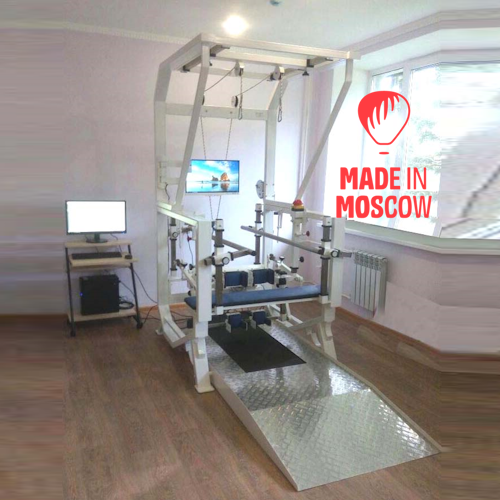
System for Locomotor Therapy (SLT)


Materials: steel, aluminum, textile, rubber, cables, electronics, padding Weight: 300kg Shelf life: according to unit’s condition The components of the System for locomotor therapy are directly a treadmill, a bed with bars and a ramp, a patient's weight compensation device with a strap safety bel...
Materials: steel, aluminum, textile, rubber, cables, electronics, padding
Weight: 300kg
Shelf life: according to unit’s condition
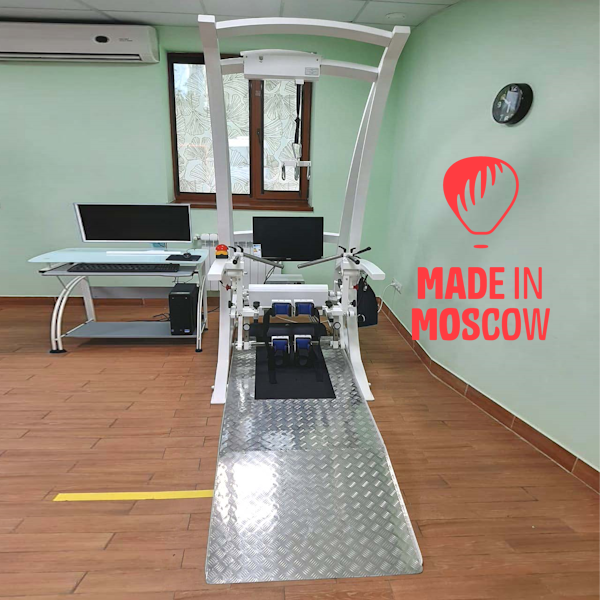
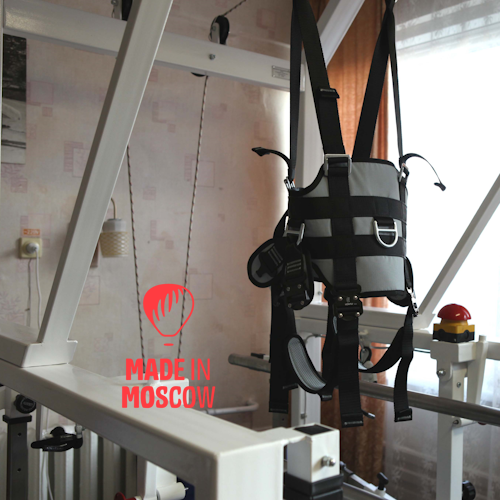
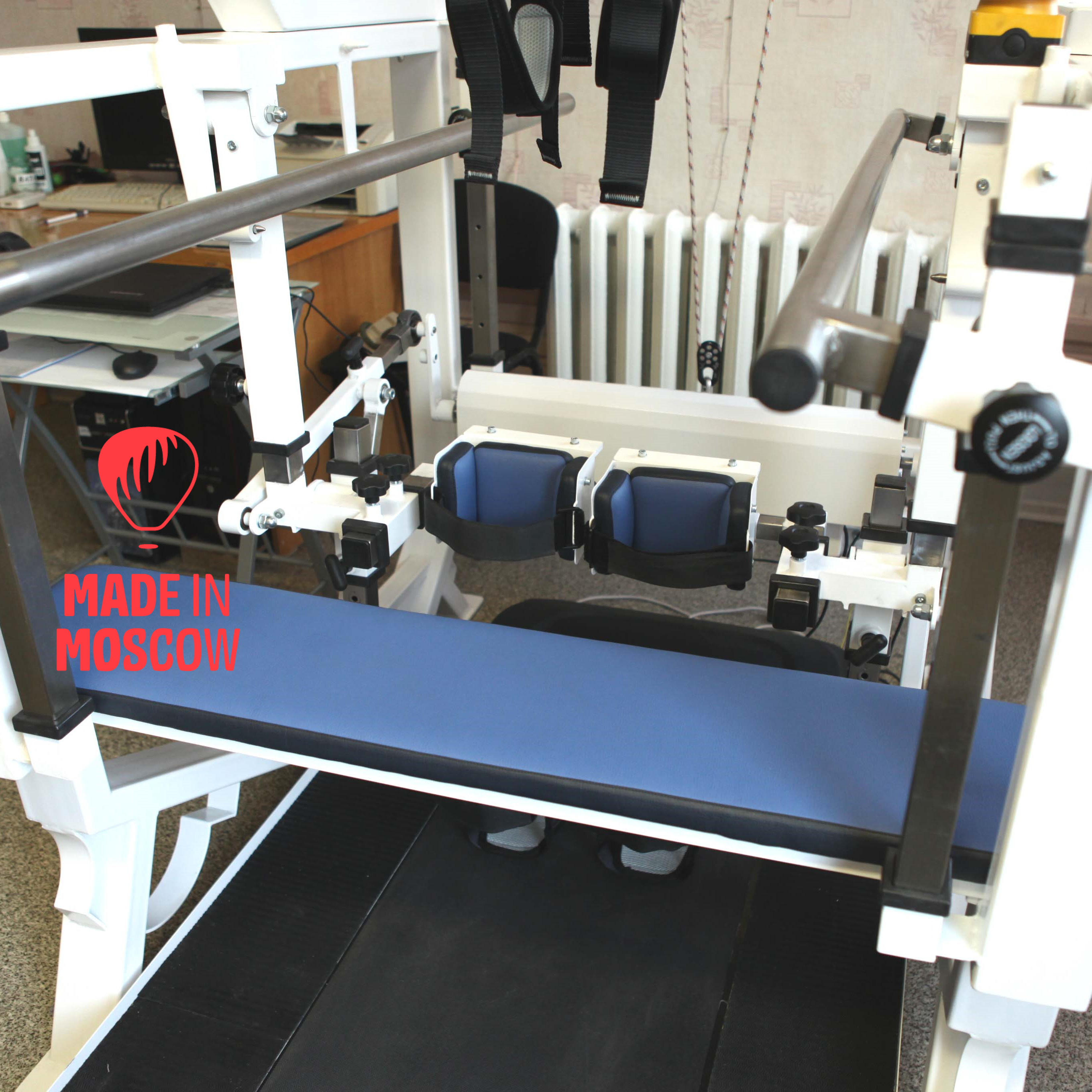
The components of the System for locomotor therapy are directly a treadmill, a bed with bars and a ramp, a patient's weight compensation device with a strap safety belt, as well as an electromechanical design for forced movement of the legs on the treadmill.
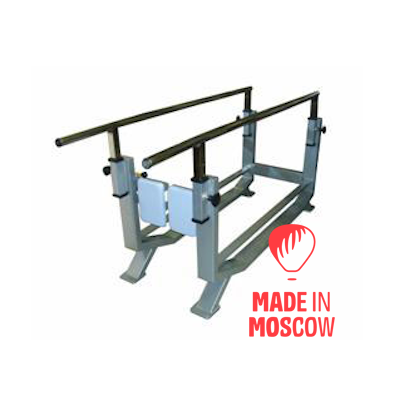
For the convenience of patient placement, a bed with bars and a ramp is made above the treadmill. The bars are adjustable in width and height depending on the patient's height.
The patient's weight compensation device is made in the form of an upper compensator, which is a system of blocks and cables. The two upper blocks are located above the patient. These blocks can move longitudinally at a distance of +340 and -430 mm in order to apply compensatory forces at the required angle based on the condition of the muscular corset of the patient's body.
The external view of the displacement node of the upper blocks is shown in the figure. In addition, the system supports the patient at two points, separated from each other by the width of the patient's shoulders. This is done in order to achieve a more natural weight distribution than when suspended at one point.
The treadmill for locomotor therapy has a length of 1200 mm, which allows patients up to 2 m tall to walk. The width of the treadmill is 500 mm.
The operation of the SLT is controlled from a laptop with a specialized program. When working with this program, you can set the speed of the treadmill belt, the movement of one or two legs, monitor the patient's spasticity, and monitor the patient's leg response to the applied forces.
SLT has a number of fundamental advantages:
1. Independent verticalization
2. The free movement of the pelvis allows robotic walking to be as close as possible to the natural gait of a healthy person on a treadmill.
3. The possibility of short-term rest of the patient
4. The pace of walking at which the recovery of muscle activity is more effective
5. The ability to perform step movements with only one foot
6. Four operating modes of the system
Weight: 300kg
Shelf life: according to unit’s condition
The components of the System for locomotor therapy are directly a treadmill, a bed with bars and a ramp, a patient's weight compensation device with a strap safety belt, as well as an electromechanical design for forced movement of the legs on the treadmill.
For the convenience of patient placement, a bed with bars and a ramp is made above the treadmill. The bars are adjustable in width and height depending on the patient's height.
The patient's weight compensation device is made in the form of an upper compensator, which is a system of blocks and cables. The two upper blocks are located above the patient. These blocks can move longitudinally at a distance of +340 and -430 mm in order to apply compensatory forces at the required angle based on the condition of the muscular corset of the patient's body.
The external view of the displacement node of the upper blocks is shown in the figure. In addition, the system supports the patient at two points, separated from each other by the width of the patient's shoulders. This is done in order to achieve a more natural weight distribution than when suspended at one point.
The treadmill for locomotor therapy has a length of 1200 mm, which allows patients up to 2 m tall to walk. The width of the treadmill is 500 mm.
The operation of the SLT is controlled from a laptop with a specialized program. When working with this program, you can set the speed of the treadmill belt, the movement of one or two legs, monitor the patient's spasticity, and monitor the patient's leg response to the applied forces.
SLT has a number of fundamental advantages:
1. Independent verticalization
2. The free movement of the pelvis allows robotic walking to be as close as possible to the natural gait of a healthy person on a treadmill.
3. The possibility of short-term rest of the patient
4. The pace of walking at which the recovery of muscle activity is more effective
5. The ability to perform step movements with only one foot
6. Four operating modes of the system